En
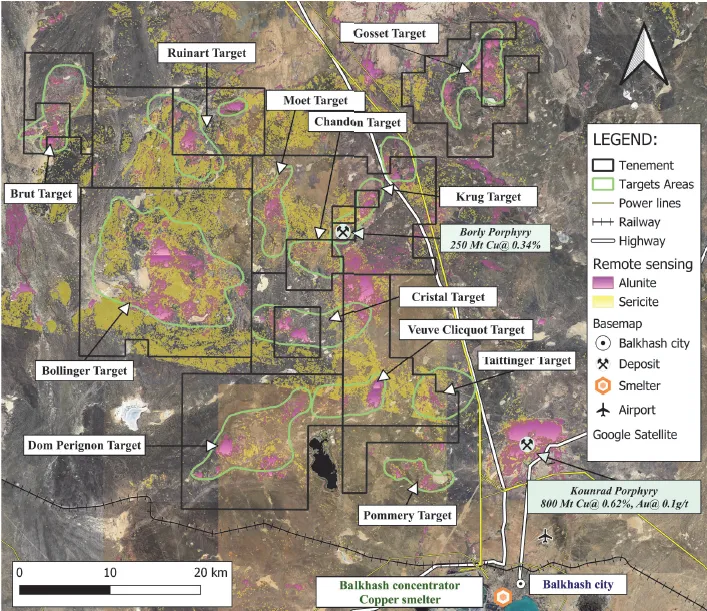
According to palaeoreconstructions and regional settings, Central Kazakhstan represents an assemblage of Devonian–Carboniferous continental volcanic belts, two of which hold significant potential for epithermal gold and copper-porphyry deposits. Among numerous deposits and occurrences, large copper-porphyry objects stand out — Kounrad, Aktogay, and Aidarly — with copper reserves of approximately 5 million tonnes.
The most prospective licences are situated along the margins of these volcanic belts. These zones are characterised by extensive granodiorite and granite intrusions, highly complex tectonic structure, and are considered promising for gold and porphyry copper exploration.
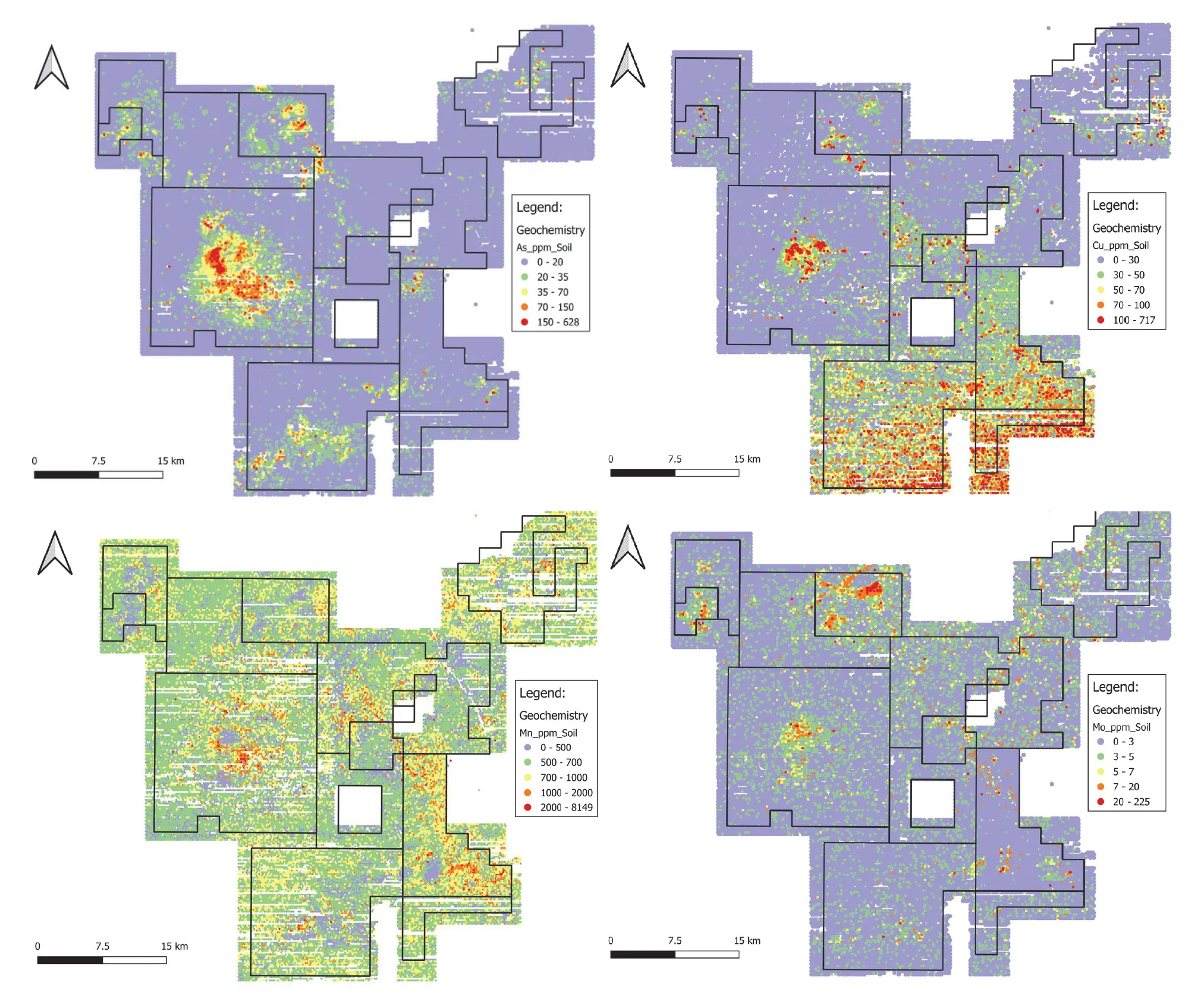
Detailed desktop and field work identified the main prospective targets. The mapping programme covered the licence areas and included study of lithology, alteration features, and mineral occurrences. Rock chip sampling was carried out at the most prospective locations and yielded positive results, while soil geochemical sampling covered the entire licence area. Analysis of soil samples revealed correlation with alteration zones and mineral occurrences. Elevated concentrations of $Cu, Mo$, and $As$, as well as pronounced manganese ($Mn$) depletion, were recorded at the main target areas.